
Tatachilla and Stephen Smith & Co: The Rise of a McLaren Vale Giant
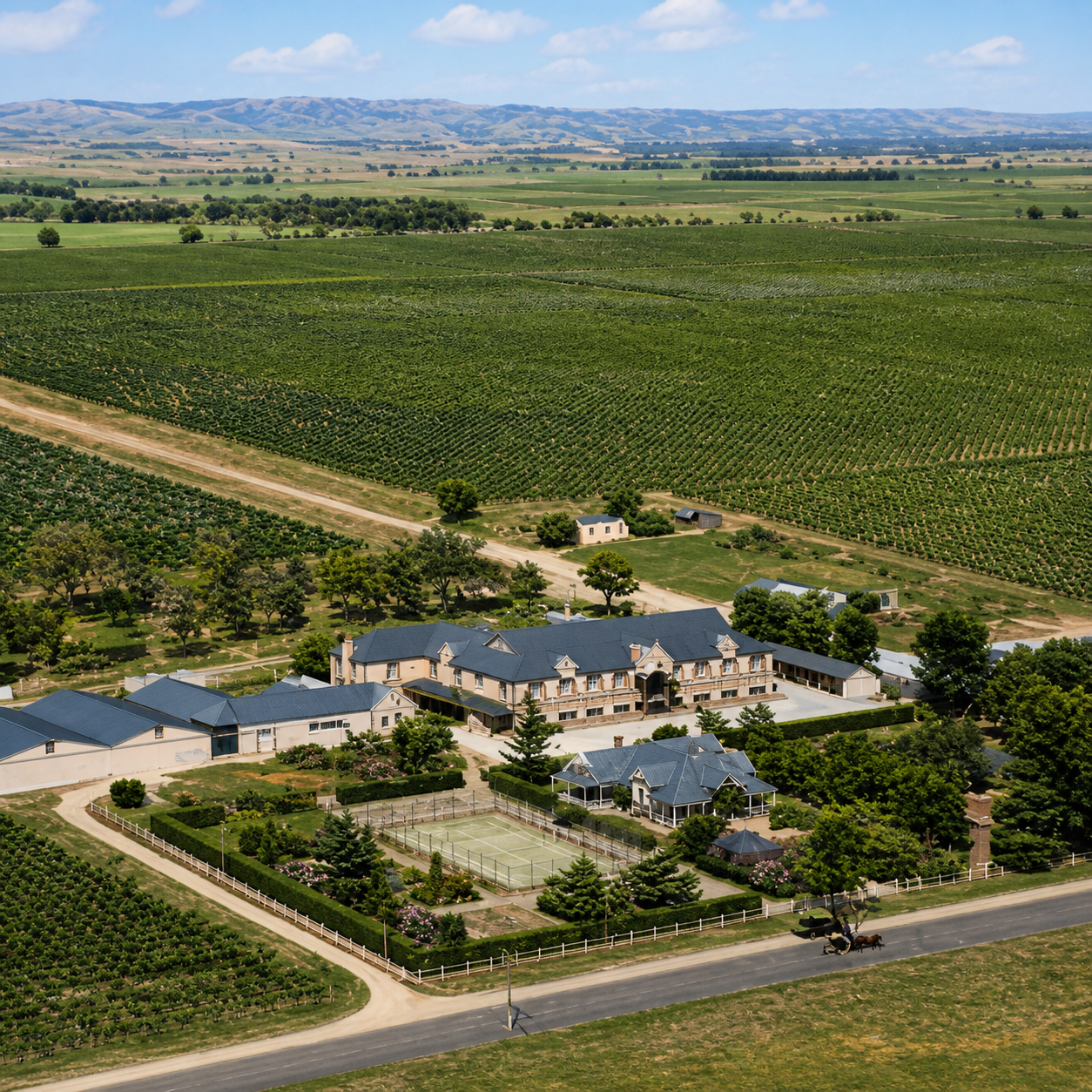
Few wineries shaped the early identity of McLaren Vale like Tatachilla. Long before cellar doors and regional tourism, Tatachilla was one of Australia’s great industrial wine estates — a vast vineyard and export winery built to supply the British market on an enormous scale.
Its story reflects the transformation of South Australian wine from colonial agriculture into an international export industry.
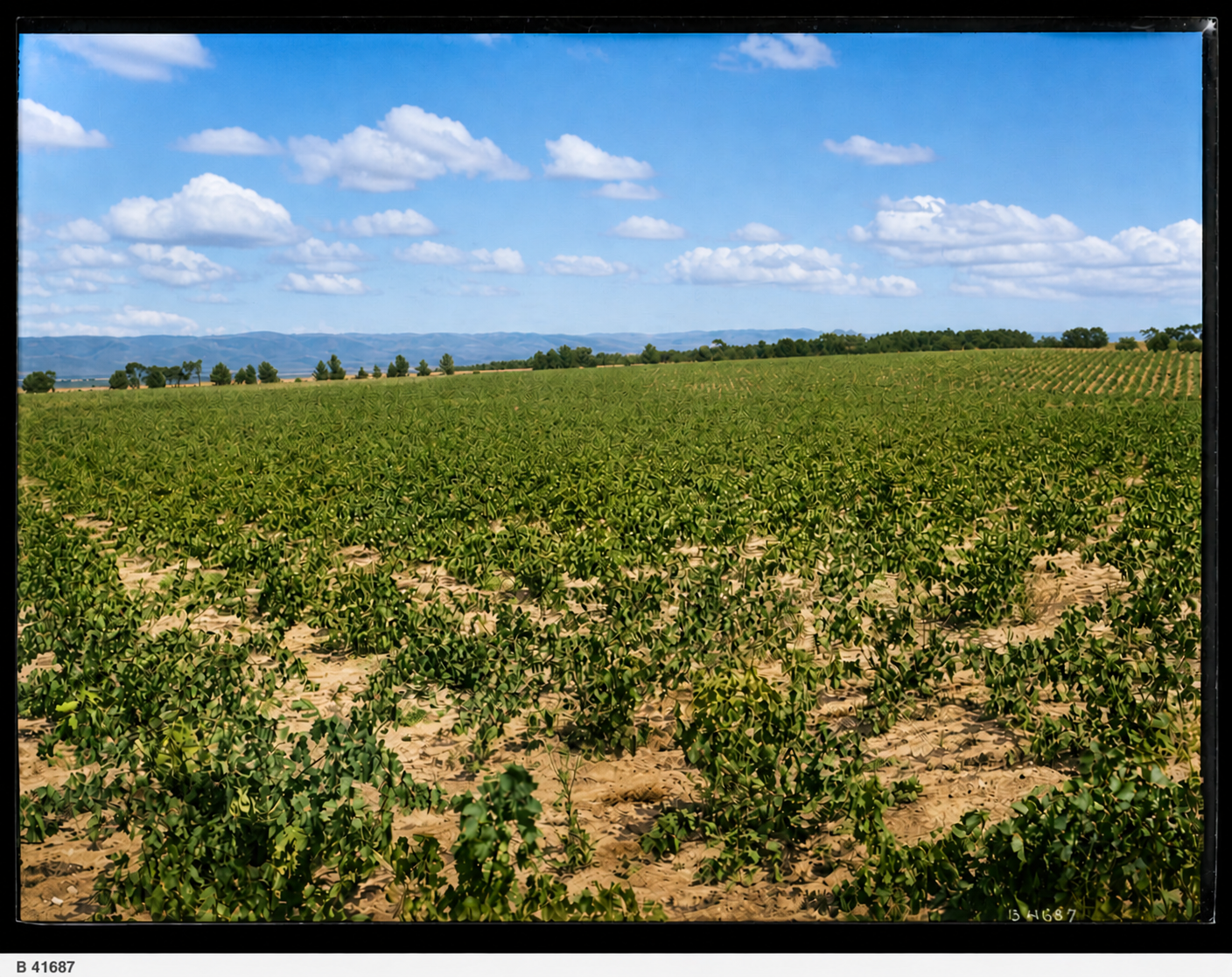
The Tatachilla property was originally established in the 1860s by John George Kelly, son of Alexander Charles Kelly, one of the pioneers of Australian viticulture and author of some of the colony’s earliest winemaking texts. By the late nineteenth century, Tatachilla had become one of the largest vineyard holdings in McLaren Vale. Contemporary records describe the estate as covering around 2,000 acres, with more than 300 acres planted to vines. The vineyard was dominated by Mataro, alongside Shiraz, Carignan and small amounts of Cabernet Sauvignon.
At first, much of the fruit was sold to other wineries, particularly Hardy’s Tintara, where Kelly also worked as a manager. But the wine boom of the late nineteenth century encouraged independent production. In 1903 Kelly constructed his own corrugated iron winery and expanded operations rapidly. A homestead followed in 1904, with further additions including distillation facilities, warehouses and spirit stores.
The next stage of Tatachilla’s history began in 1911 when the estate was sold to the London wine merchants Stephen Smith & Co. This was a major turning point, both for Tatachilla and for McLaren Vale itself. Stephen Smith & Co were deeply involved in the British wine trade and had already been purchasing wine from the district for export. They recognised the potential of McLaren Vale’s rich red wines, particularly the Shiraz and Mataro blends that suited British tastes of the era.
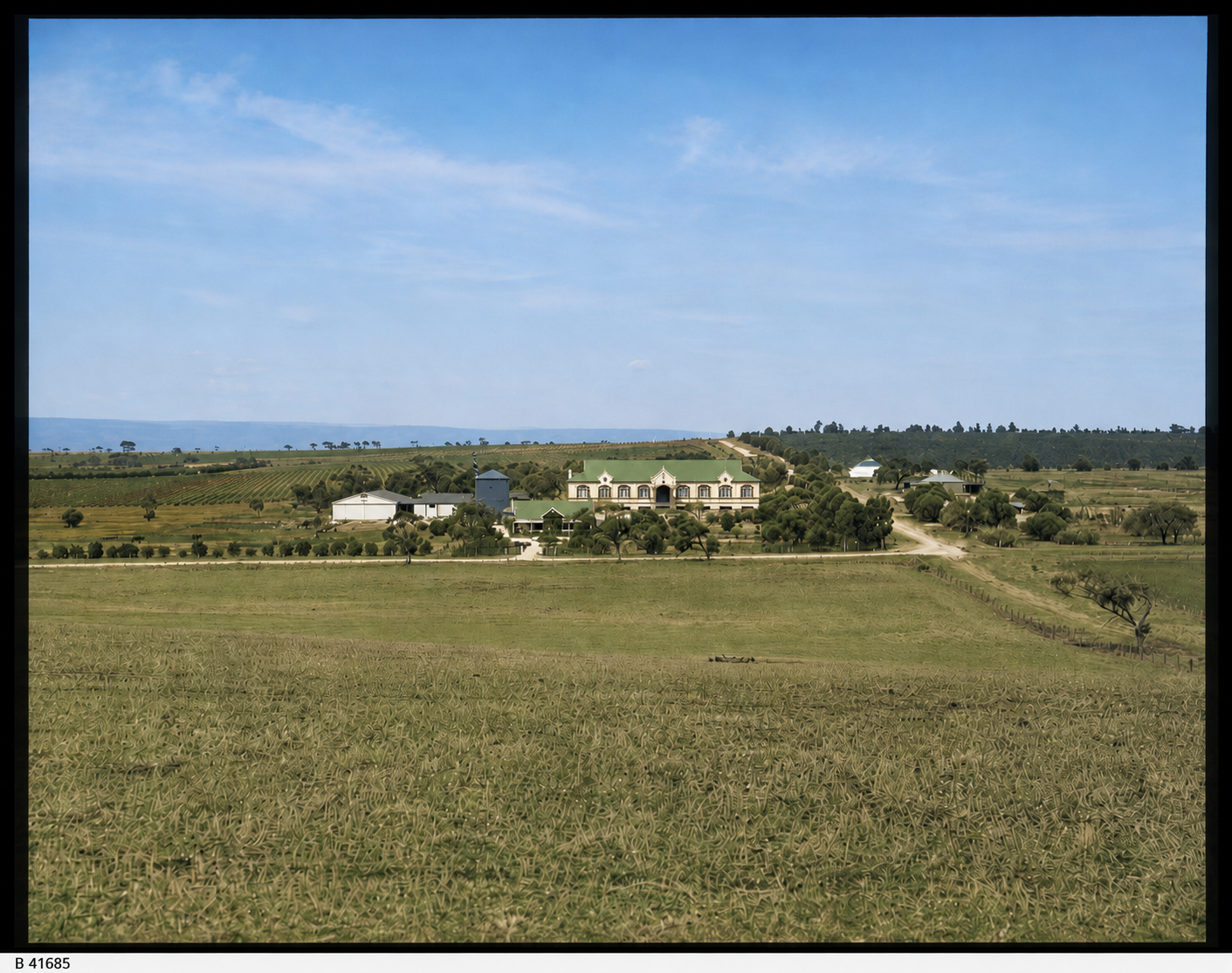
Under Stephen Smith & Co, Tatachilla became a true export powerhouse. In 1913 the company constructed the imposing limestone and brick winery buildings that still dominate the site today. The scale of the complex reflected the confidence of the era. These were not modest colonial sheds, but industrial wine buildings designed to process huge quantities of fruit for shipment overseas.
The winery produced wine primarily for the English market under the famous “Keystone Burgundy” label. At the time, “Australian Burgundy” was enormously popular in Britain. These wines were typically robust Shiraz-Mataro blends marketed as nutritious, strengthening table wines. Promotional material highlighted the iron-rich nature of McLaren Vale reds and presented Keystone Burgundy as both wholesome and fashionable. By 1929 Stephen Smith & Co were reportedly regarded as the largest shippers of “burgundy” from Australia.
Tatachilla became emblematic of an era when South Australian wineries focused heavily on fortified wines and bulk export markets. Rather than producing small quantities of estate-labelled table wine, wineries like Tatachilla were effectively industrial agricultural enterprises tied into the British Empire’s trade networks.
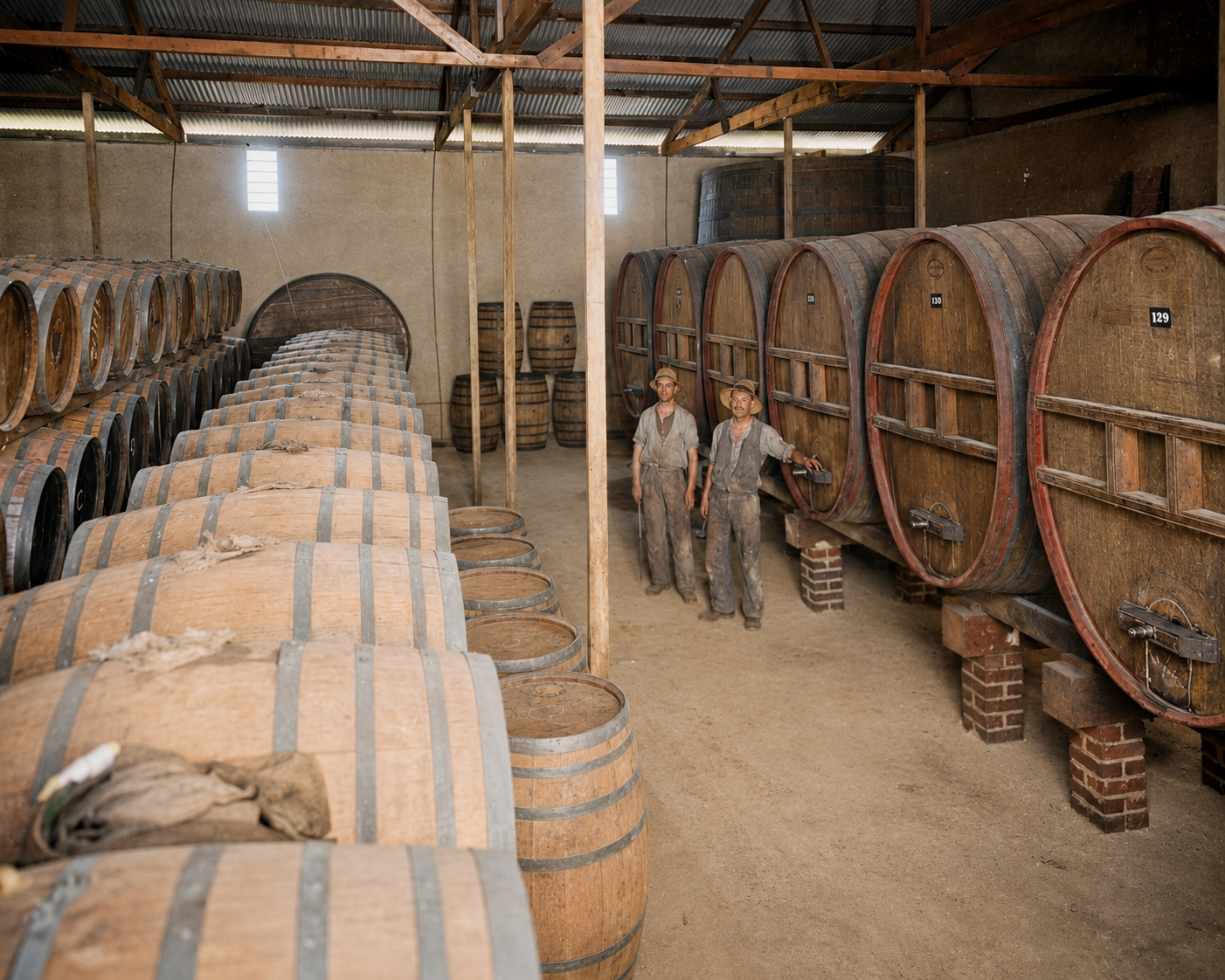
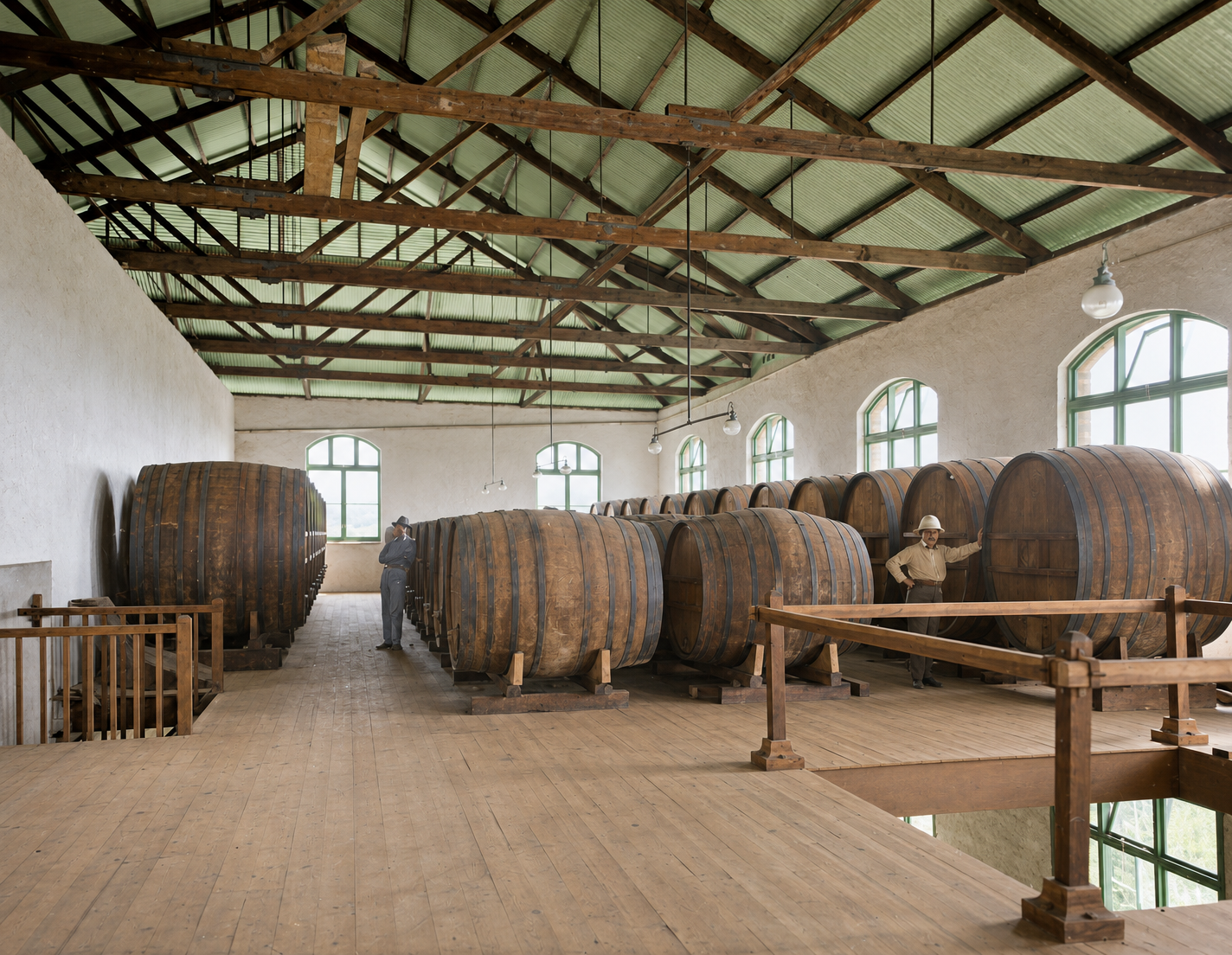
The architecture of the site reflected this ambition. Massive barrel halls, fermentation rooms, storage sheds and worker accommodation transformed the property into one of the most significant winery complexes in McLaren Vale. Historic photographs show endless rows of giant timber vats and barrels housed beneath lofty timber trusses and corrugated iron roofs — spaces designed for production at scale rather than tourism.
Stephen Smith & Co continued operating Tatachilla until 1962, when the Emu Wine Company acquired the holdings. However, the golden age of the great export burgundies was fading. Changing tastes, market pressures and the decline of fortified wine consumption reshaped the Australian wine industry. Winemaking at Tatachilla ceased in 1964.
In a twist, the site survived demolition. The Lutheran Church later acquired the buildings for use as a youth camp, preserving much of the historic winery infrastructure. Today the towering stone buildings remain among the most visually impressive reminders of McLaren Vale’s industrial wine heritage.
Modern Tatachilla wines emerged decades later through various revivals and ownership changes, but the historic significance of the original estate remains tied to the era of Stephen Smith & Co and the export trade that helped establish McLaren Vale on the world stage.