
The Barn and the Changing History of McLaren Vale
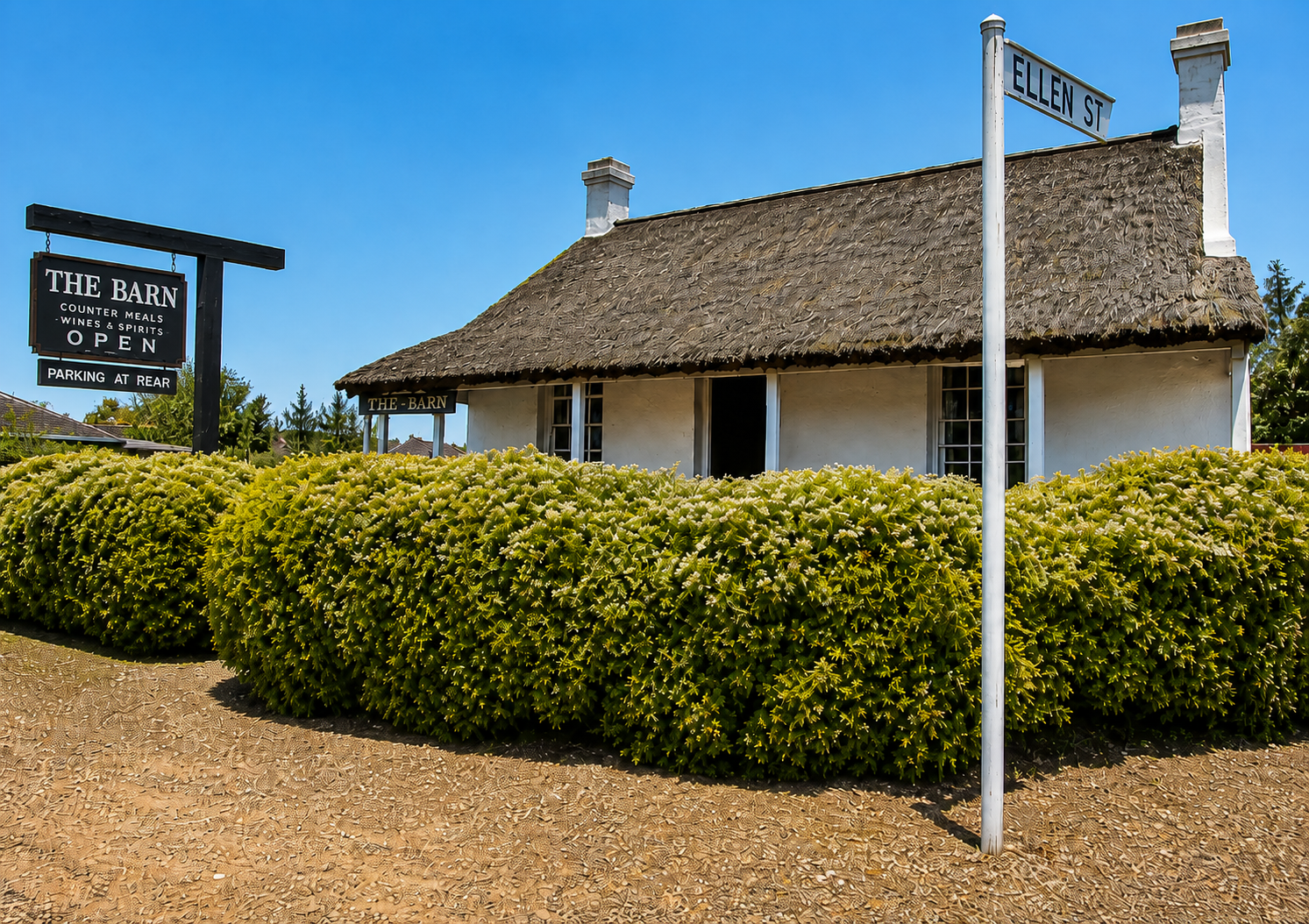
The Barn as a restaurant c. 1970s.
Among the vineyards and cellar doors of McLaren Vale stands one of the district’s most recognisable historic buildings — The Barn. Today it is remembered by many as a restaurant and hospitality venue, but the building itself belongs to a far older version of McLaren Vale, one shaped by farming, horses, freight movement, and colonial transport routes rather than wine tourism.
The history of The Barn reflects the broader transformation of McLaren Vale across more than a century and a half. Long before the region became internationally associated with wine, it was a working agricultural district supporting mixed farming, orchards, livestock, and small vineyards. During the nineteenth century, transport across South Australia depended heavily on horse-drawn coaches and wagons. Buildings such as The Barn were essential pieces of infrastructure in this system, providing stable space, storage, and accommodation for horses and transport operators moving between Adelaide and the Fleurieu Peninsula.
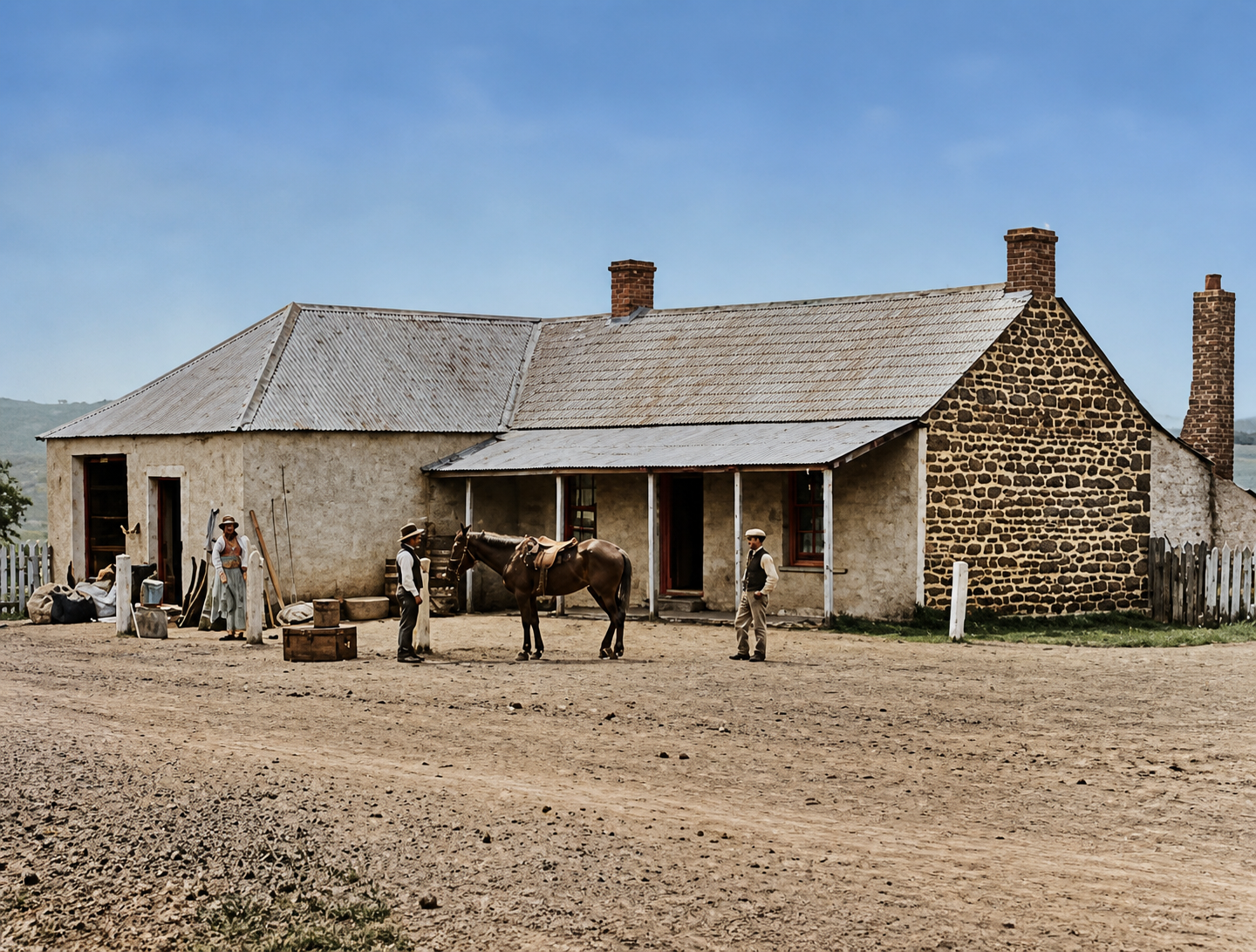
The Barn as a coach house c. 1900.
Historical accounts suggest the building dates back to the 1840s, making it one of the earlier surviving stone structures in the district. Its heavy stone walls, large openings, and practical layout reflect the needs of a transport and farming economy rather than domestic or commercial elegance. Like many colonial agricultural buildings in South Australia, it was constructed for durability and function. At the time, McLaren Vale itself was still developing as a rural settlement and the villages that later formed the township were only beginning to emerge.
As the district expanded through the late nineteenth century, agriculture became more commercialised and connected to wider markets. Improved roads and, later, the arrival of the railway line in the early twentieth century transformed freight movement through the region. Winegrowing gradually expanded and eventually became the dominant industry, although for many decades it operated alongside orchards, currants, almonds, and mixed farming enterprises.
The Barn survived these changes while many similar buildings disappeared. Across regional South Australia, former coach houses and stables were often demolished once horses ceased to dominate transport. Others simply fell into disrepair. In McLaren Vale, however, the survival of old stone agricultural buildings later became one of the defining features of the region’s tourism appeal. As wine tourism expanded during the late twentieth century, many former agricultural structures found new life as restaurants, cellar doors, galleries, and accommodation venues.
The Barn became one of the best-known examples of this transition. Its conversion into a dining venue preserved much of the atmosphere of the original structure. Exposed stonework, timber beams, cellar-like rooms, and courtyards retained visible links to the district’s rural past. Visitors were not simply dining in a restaurant, but within a building that had once belonged to the working agricultural economy that shaped McLaren Vale itself.
For many South Australians, The Barn became closely associated with regional dining culture and hospitality. Yet its historical importance extends beyond its years as a restaurant. The building represents a direct connection between modern McLaren Vale and the earlier farming district from which it emerged. It tells the story of a region that evolved from colonial agriculture into one of Australia’s most recognised wine destinations.
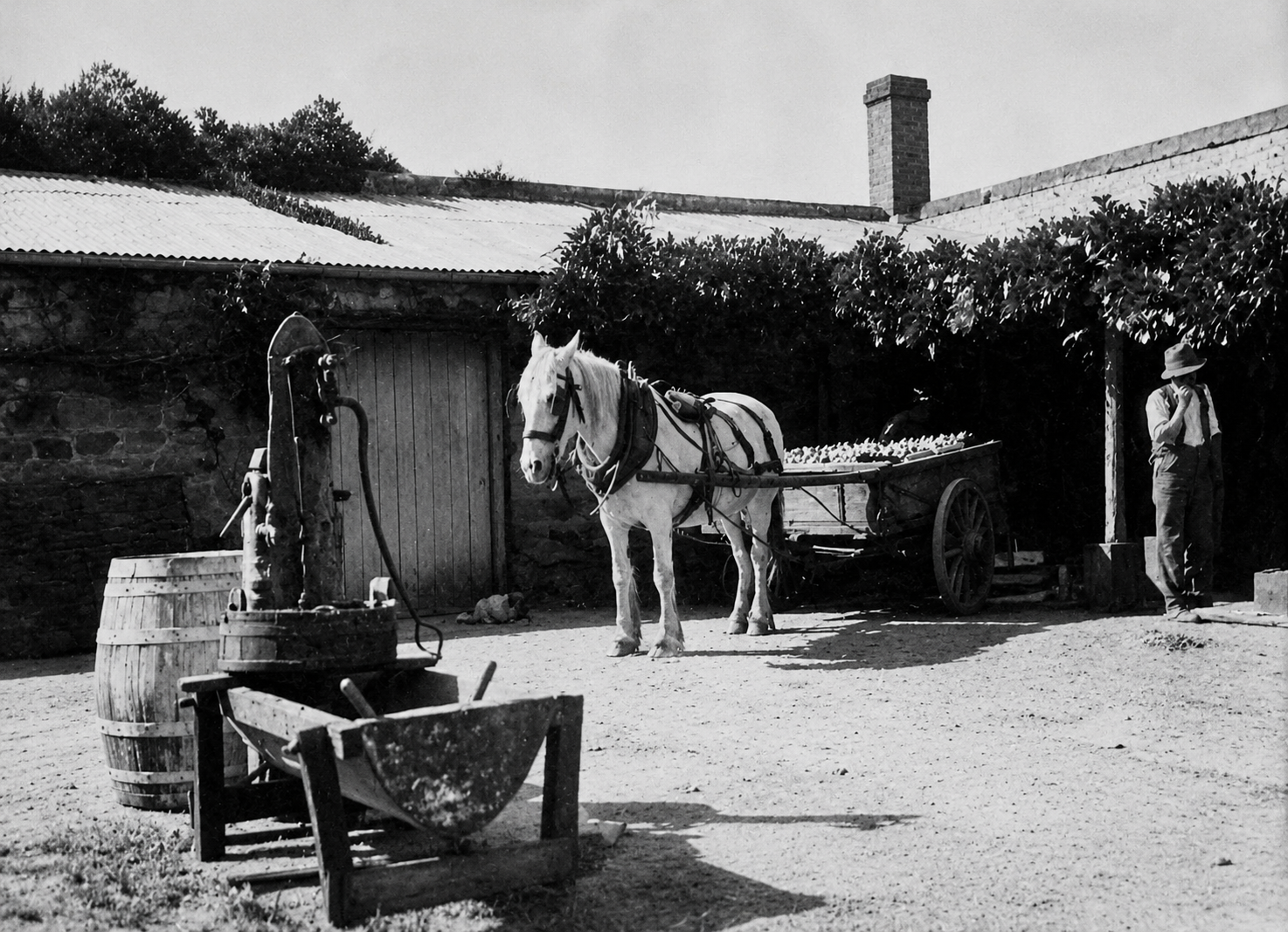
Carthorse and driver in an unknown location in the McLaren Vale region - possibly the rear of the Barn or a similar coach house courtyard.
Buildings like The Barn are important because they preserve the physical evidence of how regional communities once operated. They remind visitors that today’s wine regions were built upon older systems of labour, transport, and agriculture. Before tourism, before cellar doors, and before international wine recognition, McLaren Vale was a practical rural district dependent on freight routes, horses, produce movement, and farming infrastructure.
The Barn remains one of the clearest surviving reminders of that earlier landscape.