
Hardys Tintara and the Rise of McLaren Vale Wine
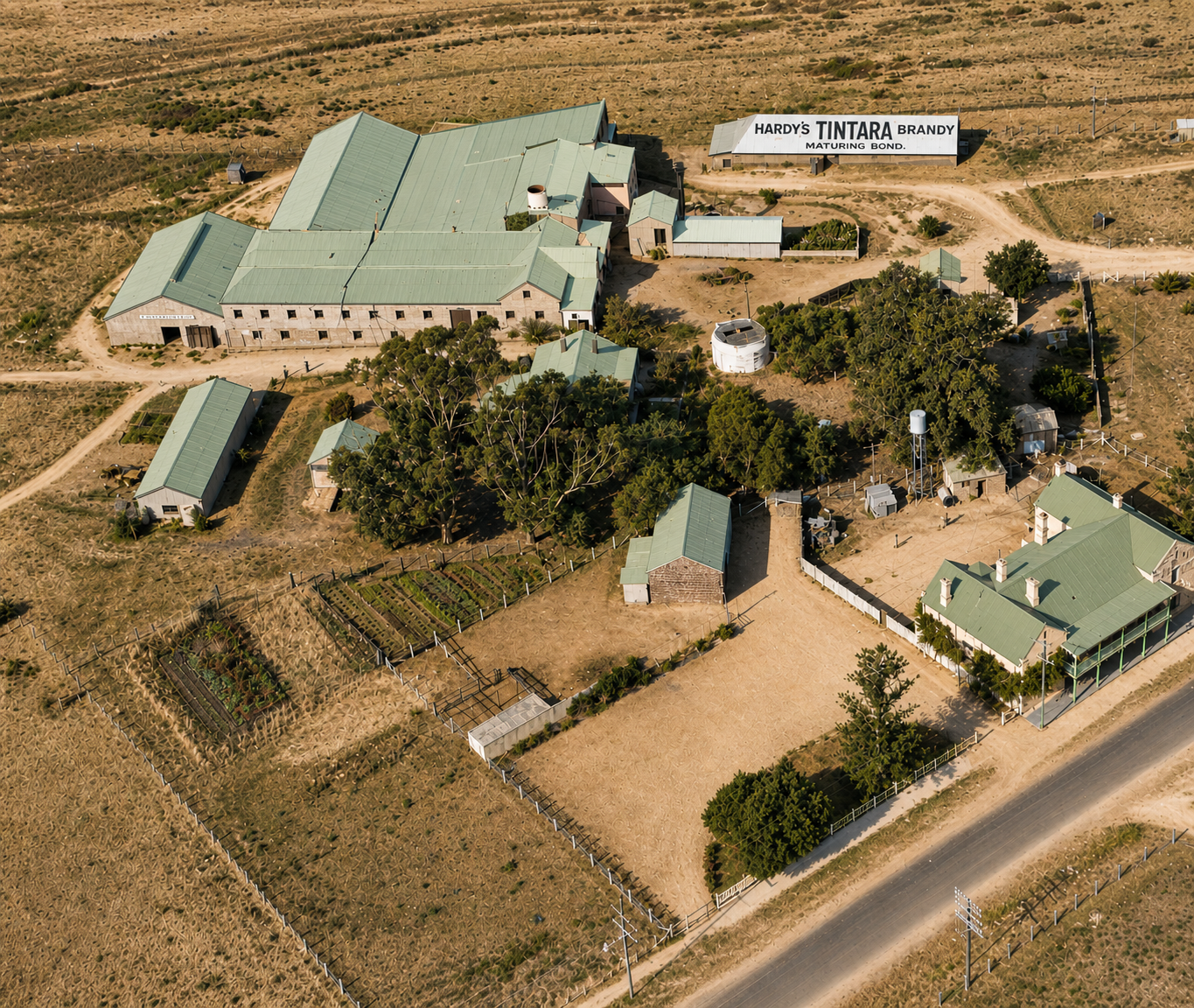
Hardy’s Tintara c. 1935 - D. Darian Smith original image colourised and restored.
Few wineries are as closely connected to the history of McLaren Vale as Hardys Wines and the historic Tintara winery.
The story begins in the mid-nineteenth century, during the earliest years of European settlement in South Australia. At that time, McLaren Vale was still a developing agricultural district of scattered farms, orchards, and small vineyards. Among the early pioneers was Dr Alexander Kelly, a Scottish doctor and viticultural enthusiast who became fascinated by the region’s potential for grape growing. Kelly planted some of the district’s earliest vineyards during the 1840s and later established the Tintara Vineyard Company in 1861.
Tintara quickly became one of the first major commercial wine ventures in McLaren Vale. Kelly was not simply a grower but also an important advocate for Australian viticulture. He wrote some of the colony’s earliest winegrowing texts and promoted the belief that South Australia possessed the climate and soils to produce wines capable of international recognition. The original vineyard plantings included varieties such as Shiraz, Grenache, Mourvèdre, and Carignan — varieties that still define McLaren Vale more than 160 years later.
The next major chapter began in the 1870s when Thomas Hardy purchased Tintara. Hardy had arrived in South Australia from England in 1850 as a young migrant with little money and few connections. After working for early wine pioneer John Reynell and later travelling to the Victorian goldfields, he returned to South Australia and gradually built his own wine business.
Hardy’s purchase of Tintara proved transformative not only for the winery but for McLaren Vale itself. Around 1878, Hardy acquired an old flour mill on the main street of McLaren Vale and converted it into a large wine cellar and production facility. This site became the foundation of what would grow into one of Australia’s largest wine companies.
The scale of Hardy’s ambition was extraordinary for colonial South Australia. Through aggressive expansion, export development, and investment in infrastructure, Thomas Hardy helped establish wine as one of the defining industries of the colony. By the 1890s, his company had become the largest wine producer in South Australia, and Hardy himself was widely referred to as the “father of the South Australian wine industry.”
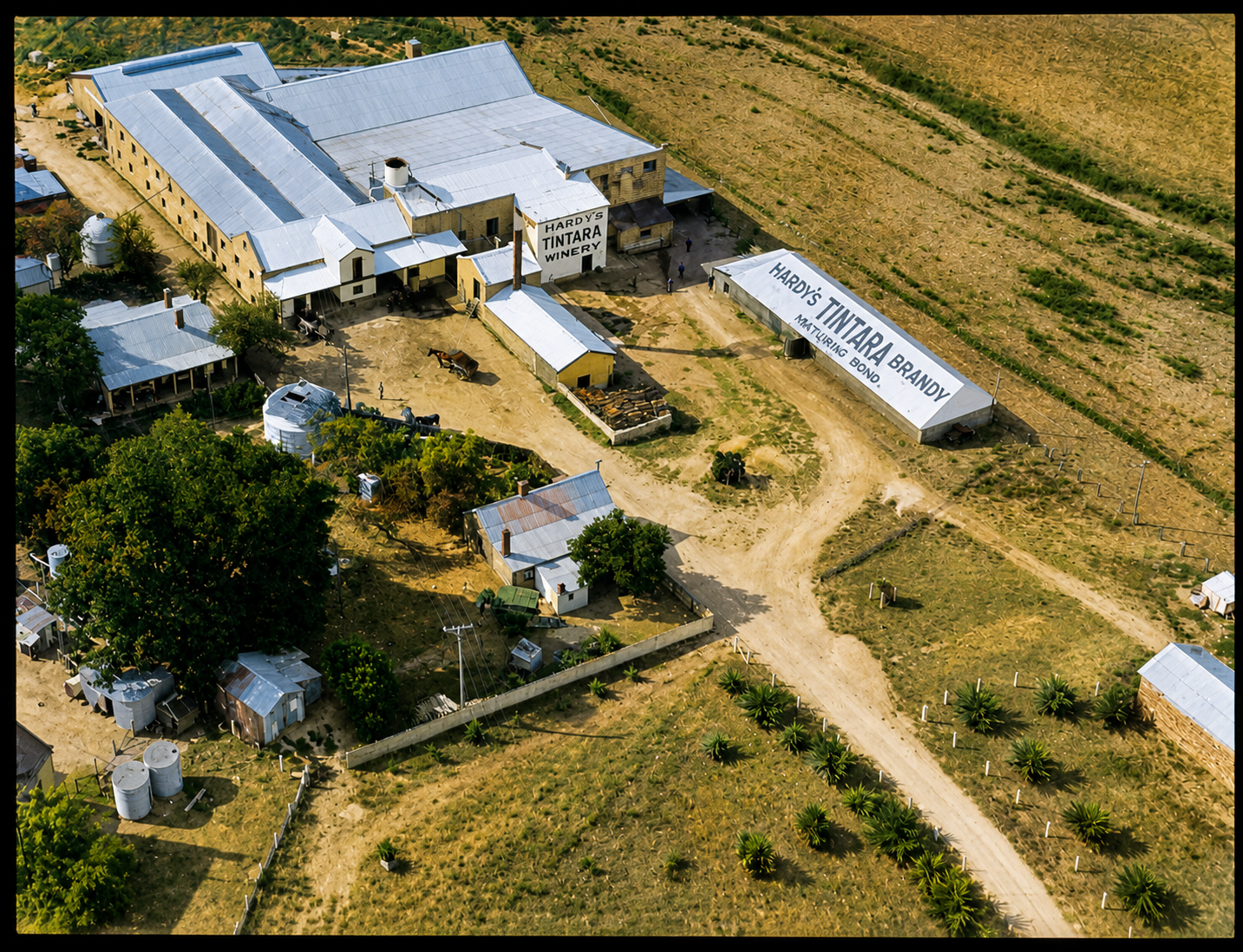
Hardy’s Tintara c. 1935 - D. Darian Smith original image colourised and restored.
Hardys Tintara therefore became more than a winery. It evolved into a symbol of industrial growth and regional prosperity. As the winery expanded, so too did McLaren Vale. The township developed around farming, transport networks, agricultural services, and wine production. The winery’s location on the main street reinforced its role as both an economic and social centre of the district.
The historic flour mill buildings still visible today are reminders of this transformation. Originally constructed for grain processing during the district’s mixed farming era, the buildings were adapted into wine cellars as viticulture became increasingly dominant. This adaptive reuse reflects the wider history of McLaren Vale itself, where the region evolved from a broad agricultural settlement into a globally recognised wine district.
Throughout the twentieth century, Hardys continued to expand into one of Australia’s most influential wine companies. The Hardy family became deeply embedded in the national wine industry, with multiple generations contributing to vineyard development, winemaking, export trade, and wine promotion. The Tintara site remained one of the company’s historic spiritual homes even as production expanded across Australia.
The winery also holds an extraordinary place in Australian wine history through its association with one of the country’s oldest surviving bottles of wine — an 1867 Tintara claret. This surviving bottle provides a rare physical link to the earliest commercial winemaking period in McLaren Vale and demonstrates how established the region’s industry already was by the 1860s.
Today, visitors to Hardys Tintara encounter more than a cellar door. The site represents multiple eras of South Australian history layered together in one location: colonial farming settlement, nineteenth-century industrial growth, the rise of Australian wine exports, and the emergence of modern wine tourism.
The old stone buildings, heritage cellars, gardens, and winery structures reflect a period when wine production was becoming central to the identity of McLaren Vale. While modern tourism often focuses on tasting experiences and regional lifestyle, sites like Tintara remind visitors that the district was built through generations of agricultural labour, entrepreneurial risk, and infrastructure development.
Few places illustrate the history of Australian wine as clearly as Hardys Tintara. The winery tells the story of how a small colonial farming district became one of the country’s most important wine regions, and how one ambitious migrant family helped shape the future of South Australian viticulture.