
It is difficult to imagine now, but more than a century ago there was serious discussion about bringing a railway through our property. One of the proposed Willunga Railway routes would have approached from Clarendon and travelled through the productive country around Kangarilla and Dingabledinga.
This line would have been known as the Blackwood-to-Clarendon-to-Willunga Line.
Then then owner of our property, Felix de Caux, was the chief campaigner for railway access via Clarendon. He advocated for almost 30 years to get it built.
The idea of a Willunga railway was not new when the twentieth-century campaign began. In 1850, Governor Sir Henry Young had already submitted such a proposal to Council. The campaign to get a Willunga train continued to through the late 1870s when Rev. E. K. Miller became secretary to the Willunga Railway Committee. A Bill was brought before Parliament but failed partly because of a division between those who wanted a Clarendon route and those who wanted a Goodwood-to-Brighton-to-Willunga coastal route.
The Clarendon route was favoured by many as it used the first ten miles of the Adelaide-to-Nairne trainline which was beginning construction. Although the government surveyor De Mole reported branching off the Nairne route through Blackwood-to-Clarendon-to-Willunga route favoured by De Caux was "almost impossible," while the coastal advocates could not muster enough support on their own despite making plans to bundle the coastal railway with a plan to construct a Port Facility at Marino. It was estimated that a breakwater and pier at Marino could be built for around £263,000 — cheaper, it was argued, than the competing Largs Bay harbour proposal then before Parliament.
Too hard, too complicated and the costs couldn’t be made to meet expected revenues.
The trainline plan was delayed until the early 20th Century. In 1909, De Caux again appeared before the Parliamentary commission investigating the proposed southern railway. De Caux described Dingabledinga’s orchards and agricultural potential, arguing that the isolated hill district deserved access to reliable transport.
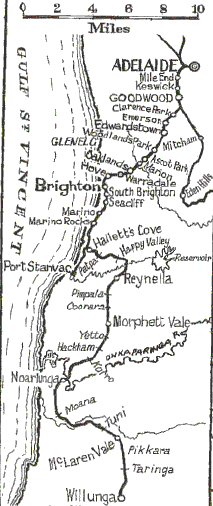
The “De Caux” line was never built.
Instead, Parliament authorised the Goodwood-to-Willunga railway along the easier western route through Hallett Cove, Reynella, Morphett Vale, Noarlunga and McLaren Vale. It eventually opened in January 1915, leaving Dingabledinga as is on the other side of the range.
But what if the decision had gone the other way?
A railway through the hills
Imagine a steam train leaving Blackwood heading to Clarendon and winding south to Kangarilla, then through Dashwood Gully crossing creeks on timber bridges and climbing gradually towards Meadows.
From there, the railway runs near Meadows Creek towards Dingabledinga. The trainline resemmebles the Bridgewater-to-Mt Pleasant line that runs along the Torrens Valley through Oakbank.
The journey is slow. In winter, mist settles over the line and smoke from the locomotive hangs between the gums.
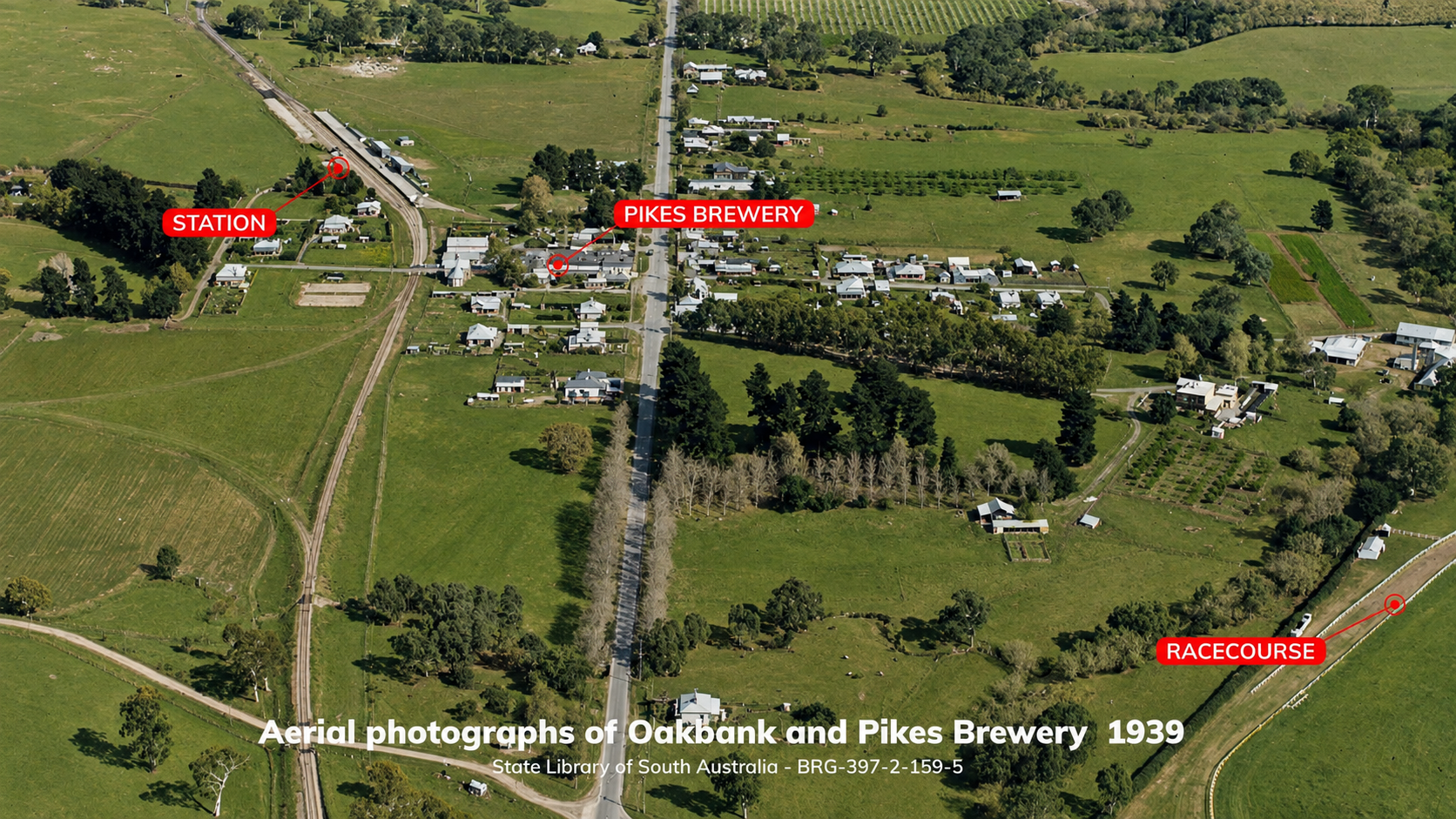
The Balhannah to Mount Pleasant railway line was authorized in 1914 and opened for traffic on September 16, 1918.
A small station stands beside what is now Brookman Road. Its sign reads:
DINGABLE-DINGA*
Nearby are a goods shed, loading platform, water tank and stationmaster’s cottage. Horse-drawn carts wait beside the platform, carrying apples, pears, potatoes, milk cans, wool and livestock from surrounding farms.
*Dingabledinga was originally written down as two words “Dingable-Dinga”.
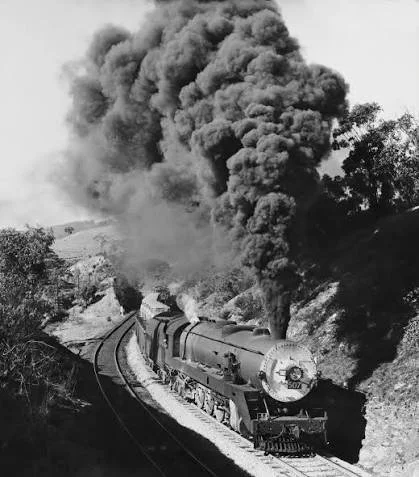
1920’s train through Eden Hills.
The train whistles. Somewhere across the valley, a farmer checks his watch and knows it must be ten o’clock.
The orchard district that might have been
At the beginning of the twentieth century, Dingabledinga was considered promising fruit-growing country. Its elevation, reliable rainfall and cooler conditions suited apples, pears, cherries and other temperate fruits.
The problem was transport.
Fruit had to be carried over rough hill roads before it could be placed on a train or taken to market. The journey was slow and expensive, and delicate produce could be bruised before it reached Adelaide.
A railway station at Lazy Ballerina might have changed everything.
Cold stores, packing sheds and produce merchants could have gathered around the station. Growers might have formed a cooperative to grade, pack and market their fruit. Instead of individual farmers carting small loads over the range, entire railway wagons could have carried the district’s produce directly to Adelaide.
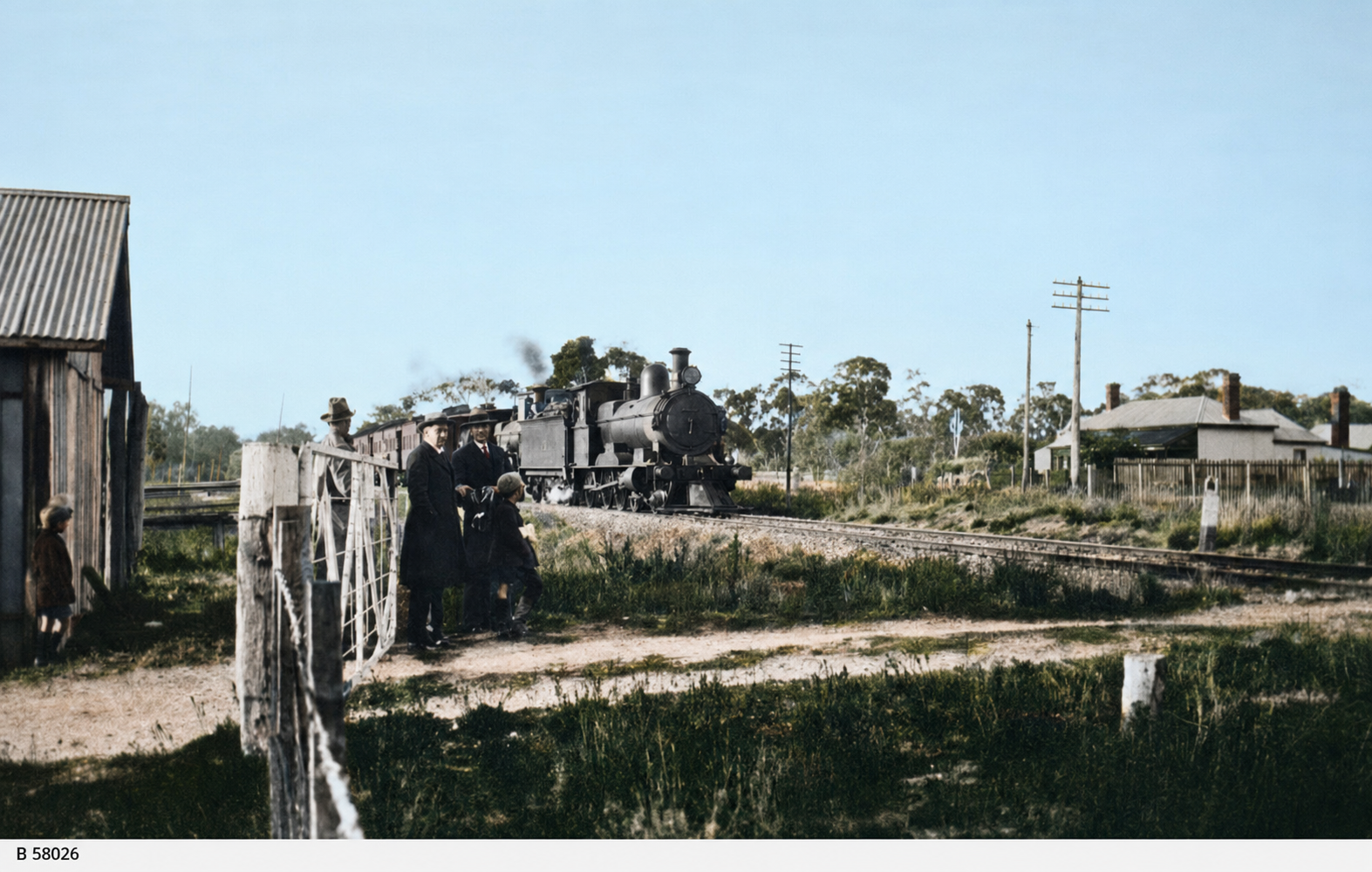
The Oakbank Train in 1925.
Dingabledinga might have developed into one of the best-known orchard districts in the southern Mount Lofty Ranges.
Perhaps today we would talk about “Dingabledinga apples” in the same way we speak of Lenswood apples or Adelaide Hills cherries.
A different town in the hills
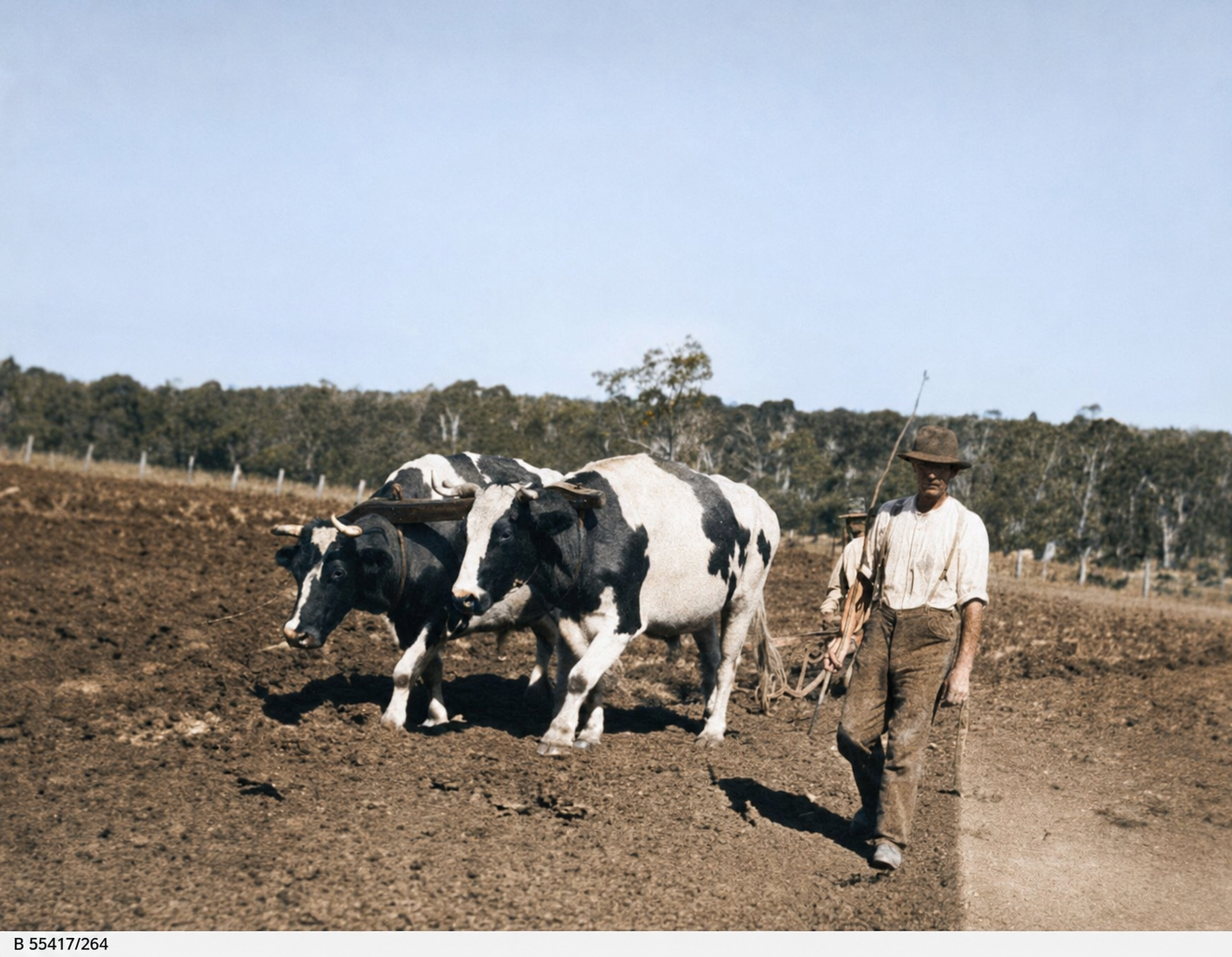
Frank Hailstone ploughing with bullocks on his Dingabledinga property - 1922.
Railways did more than carry produce. They created towns.
A station often attracted a general store, hotel, post office, blacksmith, stock agent and agricultural merchant. Houses appeared nearby, followed by churches, sporting clubs and community halls.
With a railway, Dingabledinga might have grown beyond its scattered farms and homesteads. A small township could have developed around the station, serving the surrounding districts of Hope Forest, Kuitpo, and the The Range.
There might have been a Railway Terrace, a Station Hotel and a row of stone cottages overlooking the line. The Dingabledinga Show could have attracted visitors from Adelaide, while weekend excursion trains brought picnickers into the cool hills during summer.
The railway might also have changed the Depression-era settlement at Hope Forest. When unemployed families were placed on small rural holdings there during the 1930s, access to markets was one of their greatest difficulties. A nearby railway could have given those settlers a better chance to sell fruit, vegetables, timber, milk and livestock.
There would be less wine!
The line would almost certainly have influenced the wine industry too.
From Dingabledinga, the railway would have descended towards Willunga. This would have seen the route differ from what was really constructed through Reynella, Morphett and McLaren Vale which allowed barrels of wine to travel by rail back to Adelaide.
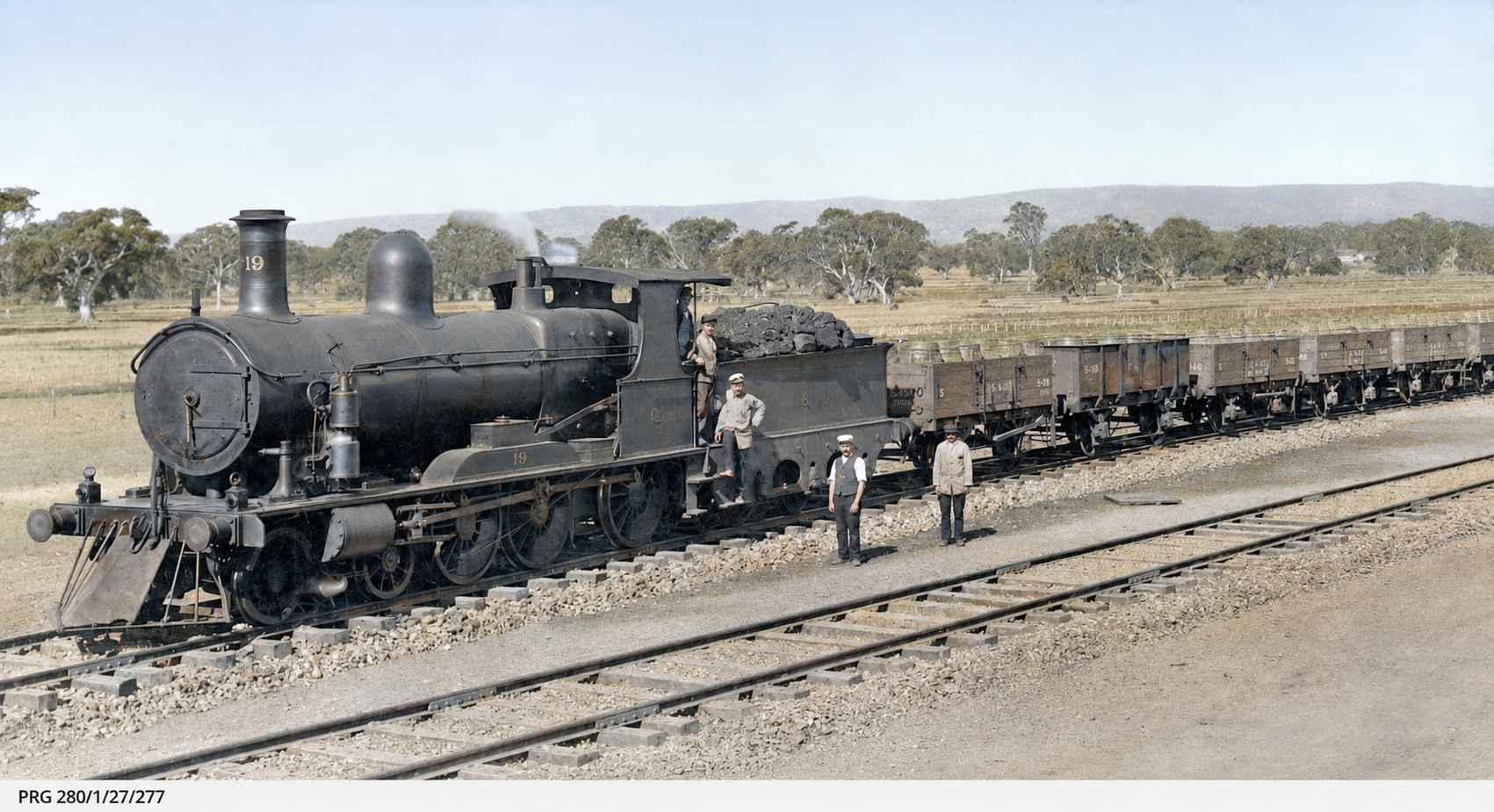
Wine barrels from transport at the McLaren Vale Train Station.
Would it have survived?
The romantic answer is yes.
The realistic answer is no.
A railway through the southern ranges would have been costly to construct and maintain. The steep terrain would have required cuttings, embankments, bridges and a winding alignment. Steam locomotives would have struggled with the gradients, while floods and landslips could have regularly disrupted services.
As road transport improved, the line would probably have faced the same pressures that eventually closed the Willunga railway in 1969.
But its route through spectacular country might have given it another life. It could have survived as a tourist railway, carrying visitors through the forests, and orchards the southern Mt Lofty Ranges. Alternatively, the abandoned formation might now be one of South Australia’s finest rail trails.
Imagine cycling from Clarendon to Dingabledinga along a gentle railway gradient, passing old stone culverts, station platforms and forgotten orchard sidings.
The railway that lives only in imagination
The railway through Dingabledinga never progressed to construction. The government selected the more practical route through the coastal plains, and the completed Willunga line remained west of the ranges.
Felix de Caux and the other hill farmers continued to rely on horses, carts and difficult roads. Later generations turned to motor vehicles, and Dingabledinga remained a quiet rural district rather than developing around a railway town.
No locomotive ever steamed through Dingabledinga—At Lazy Ballerina, we like to imagine a weekend wine train from Adelaide: passengers travelling through Clarendon and Kangarilla before arriving among the vineyards and gum trees. Sunday lunch would come with the warning: “Don’t miss the last train back to Adelaide.”