2020 Vintage Report

The COVID Lockdown Vintage!

Vintage Report by James Hook


Lazy Ballerina wines made: Shiraz, Grenache, Viognier, & Non-Vintage sparkling wines.


The McLaren Vale Wine Region experienced a drier than average growing season for the third year in a row. The continuation of dry conditions has contributed to generally low yields across the region.

The reported crush of winegrapes from McLaren Vale was 28,751 tonnes in 2020, down by 13 per cent compared with the 2019 reported crush of 33,055 tonnes. Over the past five years (up to 2019), the average crush for McLaren Vale has been 36,590 tonnes, making the 2020 crush 21 per cent below the five-year average.

Dry conditions during spring reduced the vigour of vines, while several days of very high winds in late November were seen to reduce the berry set of Cabernet Sauvignon and Tempranillo which were flowering at the time.

The summer of Vintage 2020 was a tale of two summers. Our “first” summer, the month of December, was the hottest on record.

December’s hot weather had vines showing signs of water and heat stress much earlier in the season than they would typically but also suppressed Powdery and Downy Mildew and there were very low levels of disease this vintage.

Fortunately, to break the record hot weather, the northern Australian monsoon season started at the start of January, and temperatures over southern Australia dropped correspondingly. We had 13 consecutive days below 30°C from 15–27 January. This was the longest such run in January since 1992 and longest in summer since December 2008. The mean average temperatures were 1.2 °C below average.

The start of February saw a monsoonal rain band move over South Australia and the McLaren Vale Wine Region experienced 20-30mm during three days of thunderstorms. It was just enough summer rain to freshen up vineyards, without the unwanted side effect of berry splitting and then botrytis bunch rot.

This trend of cooler weather continued through February and it proved much cooler than average, with no maximum temperatures above 35°C for the first time. February is “normally” the hottest month.

Grape picking took 5 weeks to complete starting at full pace in the first week of March and ending at the start of April. The report from winemakers on wine quality has been good, with winemaking made easier by cool weather and lower tonnages allowing for close attention at the winery.

tempImagenS4URc.gif

OVERVIEW OF VINTAGE STATISTICS

The reported crush of winegrapes from McLaren Vale was 28,751 tonnes in 2020, down by 13 per cent compared with the 2019 reported crush of 33,055 tonnes. Over the past five years (up to 2019), the average crush for McLaren Vale has been 36,590 tonnes, making this year’s crush 21 per cent below the five-year average. Compared with the other major regions in SA, McLaren Vale had a relatively small reduction and reported a larger crush than the Barossa Valley and Langhorne Creek for the first time since 2004, and was second largest region by volume in the state in 2020.

The total estimated value of winegrapes from McLaren Vale in 2020 was $56.5 million compared with $59 million in 2019. The decrease in production was partly offset by an overall increase in the average purchase value of grapes, which increased by 10 per cent from $1771 per tonne in 2019 to $1951 per tonne.

There were increases in average prices for the three largest varieties: Shiraz up by 8 per cent to $2107 per tonne, Cabernet Sauvignon up 12 per cent to $1998 per tonne and Grenache up by 16 per cent to $2156 per tonne. The average value of Grenache was higher than Shiraz for the first time.

The price dispersion data shows an upward shift in purchase prices, with 47 per cent of red grapes purchased at $2000 per tonne and above, compared with 26 per cent last year.

According to Vinehealth Australia data, the total vineyard area in McLaren Vale as at 30 April 2020 is 7349 hectares, compared with 7337 hectares in 2019. The total area is around 100 hectares less than it was 5 years ago.

2019 Vintage Report


2019 Vintage Report by James Hook

Wines made: Shiraz, Grenache, Viognier, & Non-Vintage Sparkling Wines.


The McLaren Vale wine region relied on its advantage, natural and constructed, to have a successful vintage for 2019. Specifically, proximity to the moderating temperature influence of the Gulf St Vincent, reliable spring rainfall, and access to multiple irrigation sources and helped vineyards cope with a challenging dry and hot season.

The reported harvest from McLaren Vale was 33,038 tonnes in 2019. Over the past five years (2014-18), the average crush has been 36,492 tonnes. This year’s vintage was 9 per cent below the average.

The growing season rainfall from October to the end of March was 142mm, compared to the average of 172mm, the deficit in rain occurring during summer. The dry conditions posed significant challenges for local grape growers. A lack of summer rain meant the irrigation was important to make up for the shortfall. Using timely irrigation, firstly to develop a canopy large enough to sustain vineyard crops, then maintain the health of vines until harvest was vital.

Disease pressure (governed by rainfall, humidity and temperature) was very low for this vintage compared to the 2017 Vintage, our last season with above average rainfall, and other seasons with serious issues (1993 – downy mildew, 2011 - botrytis).  

There were two specific extreme weather events that did significantly alter vineyard development and ripening. Firstly, there was an intense hail storm in late November. The storm saw high speed winds buffet vines and hail fell leaving scars on some fruit. Then in late January we experienced our hottest daytime temperature since January 2009, 45oC, plus several days in late February where the temperatures were about 38oC.

20171220-DJI_0512.jpg

What was fruit like at harvest? Good, but there wasn’t as much of it as we’d like. At harvest vineyards in the McLaren Vale wine region generally had lower yields of fruit with more intense flavour. Vines had more open bunches, which weighed less than average.

The collective "we", the McLaren Vale grape and wine community, live and breathe our “big three” red varieties (Shiraz, Grenache and Cabernet Sauvignon). Shiraz accounts for approximately 60% of our harvested tonnage. Cabernet Sauvignon is 19% and Grenache is 5%. Shiraz yields were significantly down, while Cabernet Sauvignon and Grenache held better. For the second season in a row, our late season varieties (Mourvèdre, Montepulicano and Nero d’Avalo) held well until they were picked in late March.

Grape picking took just over 4 weeks to complete starting at full pace in the first week of March and ending at the end of the month. The report from winemakers on wine quality has been good, and winemaking was made easier by lower tonnages allowing for close attention the winery. Winemakers could use extended ferments if they required as there was little pressure to turn fruit into wineries compared to bumper years.

The combination of hail in November, a dry summer and hot weather in January and February is expected to reduce the overall size of our harvest compared to recent years. The 2019 McLaren Vale vintage yielded 33,038 tonnes of winegrapes, which was a 9% decrease compared to 2018 and roughly 9% below the five-year regional average.

2018 Vintage Report

Following up on 2017 with another classic year

Vintage Report by James Hook


Wines made:

Shiraz, Grenache, Viognier, & Non-Vintage Sparkling Wines.


Harvest at the Rosedale Vineyard: Sellicks Foothills: McLaren Vale Wine Region. 

Harvest at the Rosedale Vineyard: Sellicks Foothills: McLaren Vale Wine Region. 

As the newly juiced wine is being put into barrels to begin maturation, we can now pass comment on the season. 

The reported harvest from McLaren Vale was 35,650 tonnes in 2018, compared with 44,153 tonnes in 2017 – a decline of 19%. Over the past five years, the average crush has been 36,408 tonnes. This year’s vintage was very similar to the average.

The vintage in McLaren Vale is being touted as producing wine of excellent quality. The collective "we", the McLaren Vale grape and wine community, live and breathe the “big three” red varieties (Shiraz, Grenache and Cabernet Sauvignon). The big three combined are around 80% of our wine production. Each of these were suited by the season.

Fruit around Kuitpo and Hope Forest (technically in the Adelaide Hills Wine Region with a mix of grapes that includes cooler climate varieties like Pinot Noir) also when very smoothly. 

At this early point we are scoring the vintage between 8/10 and near perfect. The best sites are going to be as good as our region produces.

The wine quality was set up by having a good wet season in 2017 which mean healthy vines, but a dry season this year, which prevented excessive vigour or disease problems.

Summer and early Autumn were unusually dry, there was as little as 10mm of rain from 1st of January to picking in the middle of March. Fortunately McLaren Vale growers have access to multiple water sources, including recycled water, which allows for timely irrigation - and sites in Kuitpo thrive in drier seasons. 

Favourable summer ripening weather with daytime temperatures in the high twenties, with cool nights, led to fruit in great condition at picking. The good condition of fruit going into the winery allowed winemakers the freedom to take time and give full care in the winery.

Crop yields were 15-20% down on Vintage 2017 which was a bumper crop compared to average. The yields recorded this year are in line with the averages picked from 2010 to 2016.  

Lazy Ballerina 2017: People's Choice Business of the Year.

We are very pleased to announce we were awarded The People's Choice Business of the Year at the McLaren Vale Business Association Awards, sponsored by SeaLink.


Thanks to all of YOU who voted.


With love and appreciation to Paul and Pat Hook, John and Evenlyn Bourne (our parents), plus our friends who help at the business; Suzy Lincoln, Mel Hage, Tim Cox, Josh Cuffley, Katie Cameron, Hannah Moncrief, and Lucinda Martin.


Thanks to our family Elizabeth Hook, Sarah-Jane Hook and Jeremy Picton-King. Davis Bourne and our sister in Darwin, Lydia.


For yummy food we use and recommend, 'Our Place', Willunga Hill, Matchett Productions, Baylies Epicurean Delights, B.-d. Farm Paris Creek, Kommon Grounds Coffee, Howie Hill Farm and Beerenberg Farm.


Grape growers and winemakers Inkwell Wines, Rusty Mutt, WayWood Wines.


For technical help, inspiration and advice PCS Accountants, Fleurieu Figures, Chilli Chocolate Marketing, DJ's Growers and Winey Kids.

IMG_3719.JPG

Name Game - The History of McLaren Vale Wine #5

Originally the area which we now call the McLaren Vale Wine Region had many different names, one for each of the hamlets or groupings of farms that were settled in the 1800’s. Over the span of time these names have been swallowed up into the towns we now call McLaren Vale, McLaren Flat and Willunga, but for those with a sense of history names live on if you look closely.


View McLaren Vale Historic Names in a larger map

What is in a name? Click on the map to find out more.


One hamlet has survived with its own postcode almost into the present day. Landcross Farm, which had its own postcode, 5170, until recently centered on and named after the farm property which has been rejuvenated by Paxton Wines.

A few of the original settlement names have been merged into common postcodes but survived as map or service addresses. Whites Valley and Willunga South, which are both part of the Willunga postcode 5172, live on as utility addresses. Tatachilla also remains in common usage both as an address, winery brand and school, despite being swallowed by the McLaren Vale.

Some names live on as business names, Hillside formerly near McLaren Flat, lives on as Hillside Haulage the Sullivan families freight business. Taranga, which was the southern section of a farm established by William and Elizabeth Oliver when they settled in 1841, lives on in several business and property names.

Others names have fallen out of general use and remain as property names, like Bethany or Beltunga. Some have fallen out of usage entirely like Gloucester.

Why this happened makes an interesting story.


The first amalgamation of names was due to a natural increase in population. As settlers arrived in the area hamlets merged together to form towns.

Originally the region was survey in 1839 by a party led by John McLaren. McLaren was appointed as Senior Surveyor was given the task of surveying the southern districts of Adelaide. McLaren divided up the south of Adelaide into three districts - B, C and D to be released to the settlers in stages. Section C included all the land south of the Onkaparinga River to Willunga Hill as was released from 1840.

McLaren Vale was the general name for the wide valley south of the Onkaparinga Gorge. The township of McLaren Vale originally consisted of 2 small villages; Gloucester, a triangle between the Salopean Inn and Kangrilla road, established in 1851 and Bellevue, where The Barn and Limeburners stand, established in 1854.

Both small towns had a unique character. In 1841 two of the early settlers were Devonshire farmers, William Colton and Charles Hewett. The farmers bought workmen with them and established neighbouring farms, Daringa and Oxenberry Farm. These farms formed the nucleus of the hamlet Gloucester. Daringa and Oxenberry live on as cellar doors on Kangarilla Rd.

Bellevue, town to the north, began on land purchased by Richard Bell at settlement who built a little colony of thatched pug houses. He also built a hotel in 1857 and named it the Clifton in honour of his wife, nee Clift. Ellen Street also bore her name until recent years, but is now retitled as part of Chalk Hill Road. Ellen Street lives on as a wine made by Mark Maxwell. The Clifton Hotel is currently the Hotel McLaren.

The Gloucester and Bellevue towns grew together so that by 1923 McLaren Vale was gazetted by the Lands Office as a private town. In that year Mr CE Pridmore, owner of land situated half way between Bellevue and Gloucester at Sylvan Park, applied for a transfer of the portion of section 156 in the township McLaren Vale. All previous transactions for that locality were designated as in the township of Gloucester in the McLaren Vale (or Valley).

Approximately four kilometres to the southeast of these towns in the McLaren Vale was Wesleyan chapel was opened in 1854 and was given the name Bethany Chapel. Other cottages were established which gave rise to Bethany the hamlet. Later Bethany was also home to the first illuminated tennis courts which can still be seen on McMurtrie Road. 

Bethany Chapel c. 1990 prior to renovation.

I have always assumed Wirra Wirra’s Church Block wine is named after the chapel as Wirra Wirra's vineyards sit directly opposite. Can anyone confirm this?

North of Bethany is the town of McLaren Flat. McLaren Flat had the satellite villages, or hamlets, Hillside which was located west towards Kangarilla and Beltunga, to the north whose houses were mostly built at the instigation of Richard Bell, founder of Bellevue.

Blewitt Springs was further north and consisted of a series of sandy ridges linked by roads that ran in between. It has maintained its ‘independence’ on maps and as a street address although shares McLaren Flat’s telephone exchange and the greater 5171 postcode.

Bush Grenache vines at Paxton Wines - Landcross Farm.

Traveling back towards the McLaren Vale township was known as Seaview. Sir Samuel Way’s 1870’s farm called Sea View lent its name to a Seaview hamlet complete with a chapel built in 1880’s, now the cellar door for Chapel Hill Wines. Sir Samuel in turn lent his name to Justin McNamee’s Samuels Gorge winery now based in the former Sea View blacksmith’s and olive press house.

Along the road back down the hill to the McLaren Townships, George Manning established Hope Farm in 1851, which was turned into a winery over the years. The winery was renamed Seaview in 1951 by its new owners, Mr Edwards and Chaffey. The names Seaview and Edwards & Chaffey have been wine brands.
 
A look back in time... Chapel Vale, now Chapel Hill, circa 1973

Around the town of Willunga were Willunga South where the slate mines were grouped and Whites Valley which lay on the direct road to Port Willunga to the north of Aldinga. The Whites Valley village was centered on Adey Rd, Aldinga Rd and Little Rd. Several historic building remain. Some have been restored while some of the farm houses and mills have fallen into ruin.

Olivers Taranga in the 1990's.
I have been told that the Sellicks Hills, part of the Mount Lofty Ranges, which stare down on Whites Valley, were once known as the Front Hills, and are marked as such on some old maps. I haven’t seen these, but I believe it possible this name was then corrupted to be called foothills. Foothills are dryly defined as gradual increases in hilly areas at the base of a mountain range.

We get the sub-regional name Sellicks Foothills from this, but Front Hills has a ring to it in my opinion and might warrant a comeback.

Postcodes were introduced in Australia in 1967 by the Postmaster-General's Department (PMG), the predecessor of Australia Post. At this point many of the smaller regional names were swallowed up. Landcross Farm survived with a fresh postcode but Tatachilla, McLaren Flat, Blewitt Springs, and remnants Hillside, Beltunga and Bethany were all merged into McLaren Vale 5171. Willunga 5172 took over Willunga South and Whites Valley.

Willunga Post Office also had responsibilities for Hope Forest, The Range, Dingabledinga (where Lazy Ballerina the cellar door is located across from the southern tip of Kuitpo Forest) Montara and Kuitpo.

What is in a name? A lot of the history of this region.

 Wine Fight Club June 09

If you know more to these stories please comment below. It is worthwhile checking out Oliver Taranga's Cellar Door to see their old map of the region. Also the main source for this article is the great book - McLaren Vale: Sea and Vines - Barbara Santich.

The Cult of Personality - The History of McLaren Vale Wine #4

There was a time in Southern Vales where there were no cellar doors. Up until the 1970's wineries did not sell direct to the public or undertake direct tourism. One of the first cellar doors in McLaren Vale was started by Enzo Berlingieri as Settlement Wines in the 1970's.

"In 1984 the most flamboyant figure in McLaren Vale, Vincenzo Berlingieri, purchased Oliverhill with, as usual, grand schemes in mind." Oliverhill Wines- Excerpt from "The Australian Wine Compendium" 1985 Edition by James Halliday


"Old times... good times... when dirty ashtrays were a socially acceptable part of the whole cellar door experience", says Enzo's daughter Annika, "As well as tops off Fridays."

Wayne Thomas was a McLaren Vale veteran, having started his winemaking career in 1961, working for Stonyfell, Ryecroft and Saltram before establishing a cellar door at Fern Hill with his late wife Pat in ’75.

Fern Hill in 1984.
When they sold Fern Hill in 1994 they started again, launching the Wayne Thomas Wines label, using grapes sourced from growers throughout McLaren Vale.

Wayne Thomas passed away in April 2007.

Retro Photo - The History of McLaren Vale #3

You can write words, or you can take pictures. Welcome to our project of finding old photographs of McLaren Vale and surrounds and retaking them to show how everything looks today. We hope you enjoy!

Taranga as a ruin in the 1990's.
The Olivers Taranga site has been heavily re-vegetated as these photos show. The road has been built up higher forming a large embankment.

McLaren Vale Fruit packers building in 1980. Note the Caltex service station in the far right.
Fruit packers gets a makeover in 1981.
Fruit Packer Building is very similar accept for changes to the windows at the front. Cars have changed and both the trees in the foreground and the petrol station in the background have grown. If you look closely the building has 'strunk'. Part of it has been removed to make the petrol station bigger.

Aerial view of Main South Road Morphett Vale, showing the Emu Hotel centre, left of road, in the early 1950s.
Esplanade Aldinga Beach c.1979.
1970, the original Christian Bible Church chapel seen here at Sea View Chapel Hill. Gladys Stillwell & Peg Dunstan pictured.
Chapel Hill as a modern winery.
With thanks to Andrew Tuck for the pictures from the 1970's and 80's as well as some archive pictures from the State Library of South Australia.

You can view more of our work on Lazy's Facebook page.

AC Kelly - The History of McLaren Vale Wine #2

AC Kelly: Original Wine Hero

AC Kelly: Original Wine Hero

Stephen Pannell. Current custodian of the the old vineyards Dr A. C. Kelly sold to Thomas Hardy in 1876, bits of old buildings and the remnants of an orchard. Photo Philip White; DRINKSTER

Stephen Pannell. Current custodian of the the old vineyards Dr A. C. Kelly sold to Thomas Hardy in 1876, bits of old buildings and the remnants of an orchard. Photo Philip White; DRINKSTER

To quote Dr A C Kelly from Winegrowing in Australia published in 1867 -

'The time has come when the winegrowers of this colony must bestir themselves and boldly face the difficulties before them. They must be prepared to take their stand on the ground already occupied by the experienced winegrowers of Europe. 

'All have a direct interest in each other's success, for according to the quality of wine produced for export will be our status as a winegrowing country. 

'No petty jealousies need stand in the way of that friendly rivalry to produce the best wine which ought to be the endeavour of each winegrower.'

Now here was a pioneer...

Alexander Charles Kelly (1811-1877), winegrower and medical practitioner, was born on 5 June 1811 at Leith, Scotland, son of John Kelly, agent of the British Linen Co.'s Bank, and his wife Margaret, née Porteus. Alexander was educated in France and Scotland, and studied medicine at the University of Edinburgh (M.D., 1832). After practicing briefly in Scotland, he became a surgeon aboard the East India Co. ship Kellie Castle; he kept a vividly written and illustrated journal of the voyage from England to Bengal in 1833.

Later, Kelly visited Canada, where he became interested in the problems of popular education, then returned to Scotland and practiced medicine at or near Dunbar. Perhaps inspired by his brother Thomas Bell Kelly, who had migrated to South Australia in 1839, he followed, arriving in the Baboo on 11 March 1840. Kelly was enrolled as the twelfth name in the medical register of South Australia and set up at Port Adelaide. In June 1842 he was made resident dispenser at Adelaide Hospital. He bought 80 acres (32.4 ha) of land west of Morphett Vale, south of Adelaide; the official title was dated 21 August 1843, although he probably occupied the land earlier. Here he built his home, Trinity, and planted his first vineyard, about 1845.

On 1 November 1854 Kelly married Annie Frances Worthington, in the Church of Scotland, Morphett Vale. He drew on the writings of French and other European authorities, which he translated and commented on, for his first book, The Vine in Australia (Melbourne, 1861); it introduced wine chemistry and modern science to Australian winegrowers and was so popular that it was reprinted next year. His Wine-Growing in Australia (Adelaide, 1867) followed. Kelly's two influential books did much to establish Australian technical expertise in viniculture.

In November 1862 he and five of Adelaide's businessmen—(Sir) Thomas and Alexander Lang Elder, (Sir) Samuel Davenport, Robert Barr Smith and (Sir) Edward Stirling—formed the Tintara Vineyard Co., with Kelly as manager. Next year he sold Trinity to concentrate on clearing the 213 acres (86.3 ha) of heavily-timbered country near McLaren Vale which the trustees had bought in December 1862, and on planting vines, building cellars and, eventually, making mainly table wine. In 1871 Tintara shareholders sent him to London to search for new markets. The difficulties of an English market more accustomed to the strong, coarse wines of Spain and Portugal, financial depression in the colony and intercolonial tariffs that disadvantaged South Australian wines contributed to the demise of the company. In September 1877 it was announced that Thomas Hardy had purchased the vineyard, with 27,000 gallons (122,742 litres) of wine. The land was not transferred to Hardy until June 1878.

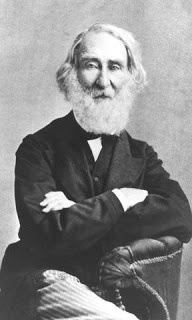
In 1868 Kelly had given articulate evidence before a parliamentary select committee on education reflecting his long-standing interest in the subject. A photographic portrait of him later in life showed a clear, kindly, open face with silvery hair and a full white beard. In 1876 he retired to his home at Norwood, where he died of bronchitis on 9 October 1877. He was buried in Clayton Chapel cemetery, Kensington, survived by his wife, three daughters and two sons, one of whom (John) was involved in the wine industry. An obituarist noted Kelly's 'obliging disposition . . . his kindness to people in straitened circumstances . . . high character, benevolence, and kindly genial manner'.